Snack Availability at Home
Published in February 2026
Introduction
The availability of snack foods in the home environment represents a significant environmental factor influencing weekend eating patterns. Population studies have shown that the presence and accessibility of snack items during weekends, when people spend more time at home, is associated with increased snacking consumption.
Home Food Environment and Food Storage
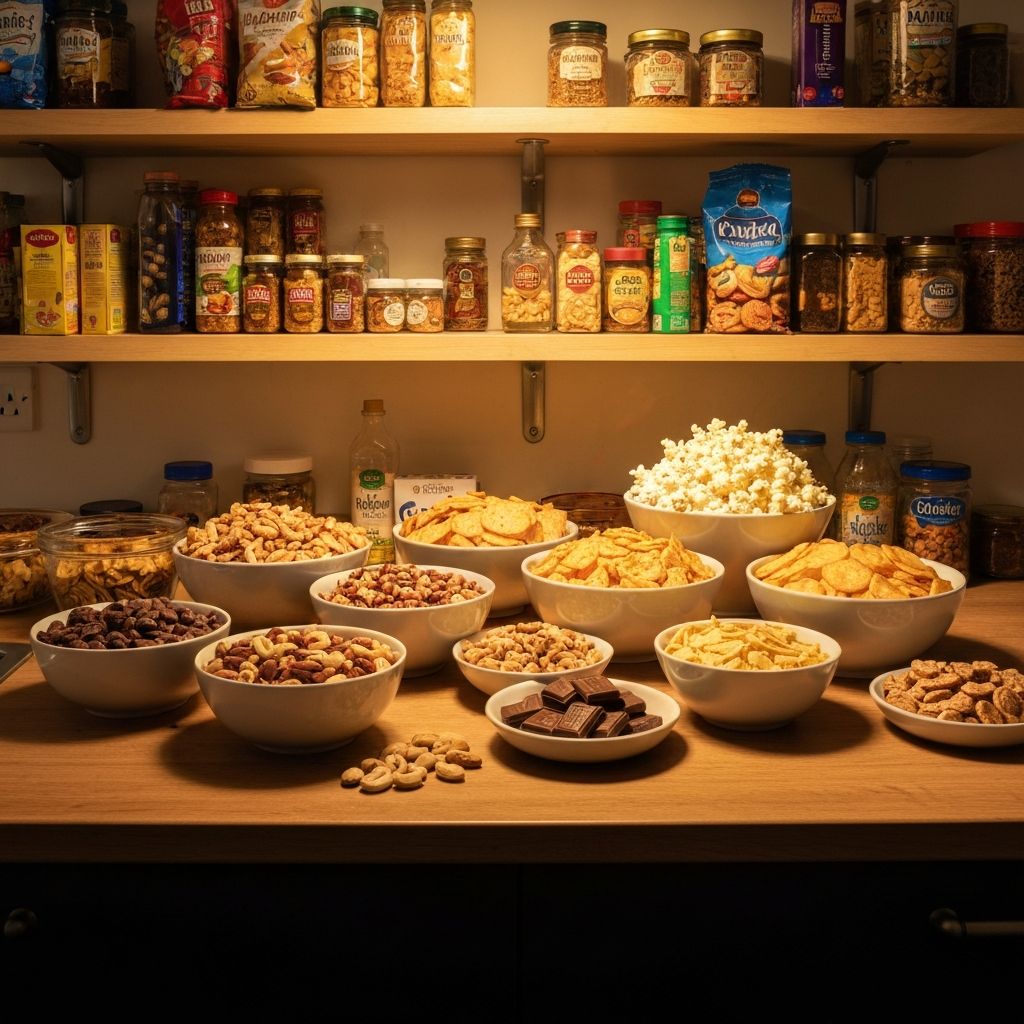
The home food environment includes all foods stored and available for immediate consumption within living spaces. During weekends, people spend considerably more time at home, increasing exposure to available foods. The visibility and accessibility of snack items influences spontaneous consumption throughout leisure time.
Weekend shopping patterns often involve purchases of snack foods intended for leisure consumption. These items are stored in easily accessible locations such as kitchen counters, visible shelves, and readily available storage, creating environmental cues for consumption.
Types of Snack Foods in the Home
Common snack items available in UK homes include crisps, nuts, confectionery, biscuits, chocolate, popcorn, and other processed snack products. The prevalence and variety of these items in supermarkets and convenience stores makes purchasing accessible and affordable. Seasonal variations occur, with certain items more prominent at specific times.
Snack food packaging is designed for individual or small-group consumption, and multi-packs allow bulk storage. The availability of diverse snack options in modern food environments means most UK households have access to varied choices.
Environmental Cues and Consumption Patterns
Research in food environment and behaviour describes how visibility and accessibility of food items influence consumption. When snacks are present, visible, and easily accessed, consumption likelihood increases. The proximity of snack items to leisure activities such as television watching, reading, or socialising creates contextual cues for eating.
Weekend leisure activities often occur in home spaces where snack foods are visible and immediately available. The combination of time availability and environmental accessibility creates conditions for increased snacking during weekends.
Time at Home and Snacking Opportunities
Weekends provide extended periods in the home environment compared to weekdays. During weekdays, structured work and activity schedules limit time available for home-based snacking. Weekends remove these time constraints, increasing exposure to home food environments.
The absence of structured meal times during leisure weekends creates opportunities for spontaneous snacking throughout the day. Rather than structured meals, weekend eating may consist of multiple informal eating occasions including snacking episodes.
Social Snacking During Weekend Leisure
Weekends often involve social activities at home such as entertaining guests, family gatherings, or informal social time. Food provision for these occasions typically includes snack items arranged for shared consumption. The combination of social occasion and readily available snacks creates an environment promoting consumption.
Shared snack bowls, communal food displays, and food serving during social interactions influence total consumption through social facilitation effects.
Weekend Shopping and Snack Purchasing
Many UK households conduct primary grocery shopping on weekends. Weekend shopping trips often include snack food purchases intended for consumption during leisure time. The act of purchasing influences availability during the subsequent weekend period.
Supermarket layouts and promotional displays influence snack purchases during weekend shopping. The visibility of sale items and promotional pricing increases purchasing likelihood, affecting home inventory of snack items.
Psychological Aspects of Home Snacking
The home environment during leisure time is associated with relaxation, comfort, and reward. Snacking in this context becomes linked with leisure satisfaction. The cognitive state during weekend leisure—reduced work stress, relaxation, and pleasure seeking—creates psychological conditions favouring snacking.
Habits formed around specific home activities, such as snacking while watching television or reading, become reinforced through weekend repetition. These leisure-based eating habits differ from weekday patterns.
Energy Density and Consumption Amounts
Snack foods typically have high energy density due to fat, sugar, and processed content. Consumption of readily available high-energy snacks contributes substantially to total energy intake during weekends. The combination of increased availability and increased consumption occasions leads to elevated snack-derived energy intake.
Package sizes and serving portions influence consumption amounts. Larger snack packages available for individual consumption may promote greater intake compared to smaller pre-portioned items.
Demographic Variations in Home Snacking
Home snacking patterns vary across households based on family structure, income, household composition, and purchasing patterns. Households with children may maintain different snack selections compared to adult-only households. Regional variations in snack preferences reflect cultural and local market differences.
Conclusion
Home food availability represents an important environmental factor influencing weekend eating patterns. The combination of increased time spent at home, readily available snack items, accessible storage and visibility, and the psychological state of weekend leisure creates conditions for elevated snacking consumption during weekends.
Understanding the home food environment as a contextual factor shaping eating behaviour provides informational perspective on how physical environments influence food consumption patterns. This information describes observed patterns without making recommendations about home food storage or purchasing decisions.